Building of the Education Development Centre
- Home
- Our Projects
|
|
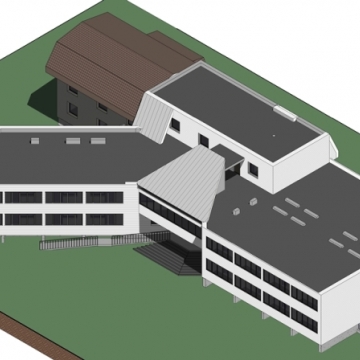
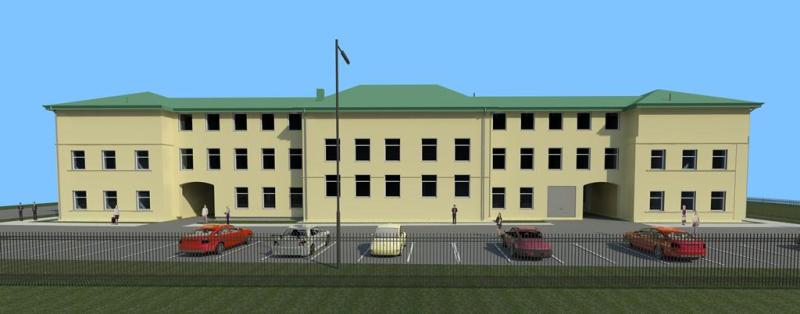
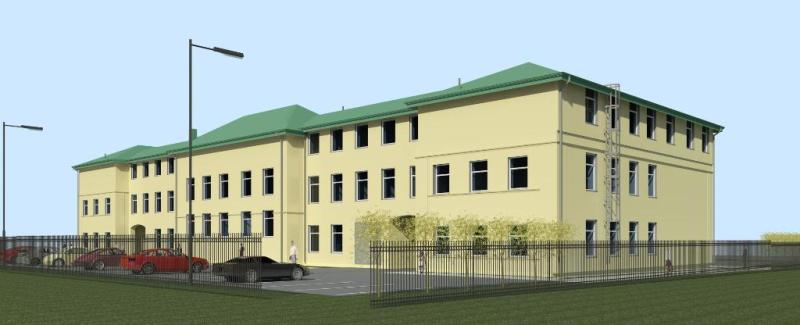
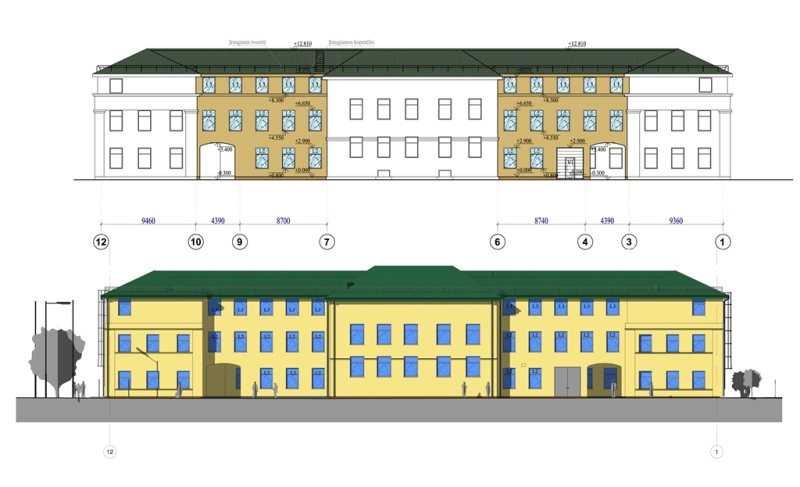
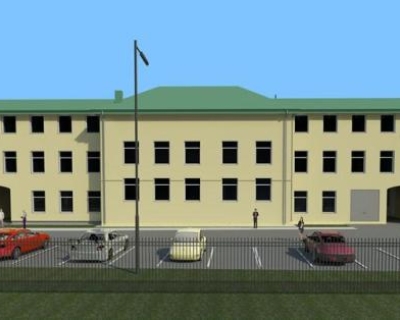
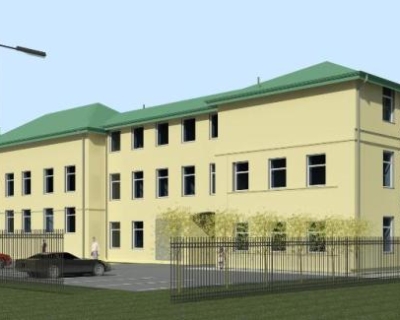
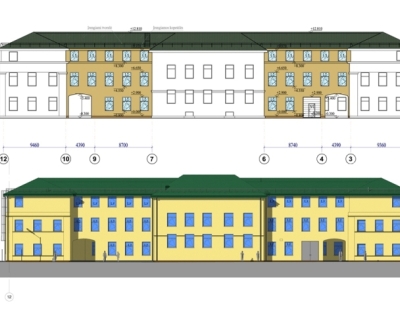
A reconstruction project of a training centre building was successfully implemented, during which the building was transformed through the reconfiguration of the basement and the construction of two two-storey extensions with attics. The extensions, built in the western part of the site, connected separate wings of the existing building, forming a functionally integrated training centre complex.
On the ground floors of the extensions, passageways were created providing access to newly formed inner courtyards. In the basement of the existing building, auxiliary premises, meeting rooms for periodic use, and sanitary facilities were installed. New office spaces were arranged on part of the first floor, while a movable partition was installed on the second floor, allowing flexible adaptation of internal layouts.
The new extensions were designed as two-storey structures with attics and basements. During the reconstruction, external staircases were refurbished and extended to the newly constructed basement areas, which accommodate ventilation chambers and heat substations. In one of the extensions, storage areas with direct external access and auxiliary rooms were installed on the ground floor. Office spaces were arranged on the second and attic floors, connected to the existing building by internal corridors.
In the second extension, a vestibule, staircase, and office space were designed on the ground floor. External staircases with an access ramp were installed to ensure safe and convenient entry. Internal staircases connect all three storeys of the building. Office spaces were also provided on the second and attic floors, linked to the existing building corridors. In addition, a gallery was designed on the second floor, connecting the extension with the existing structure.
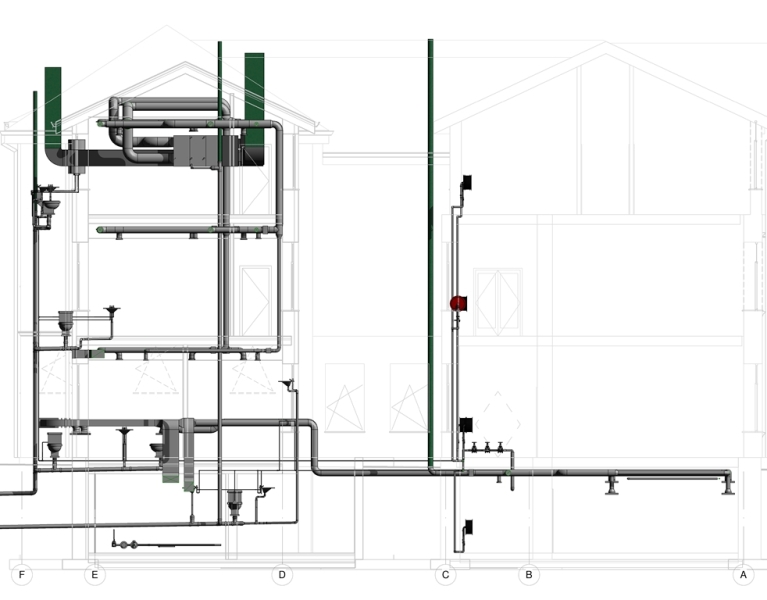
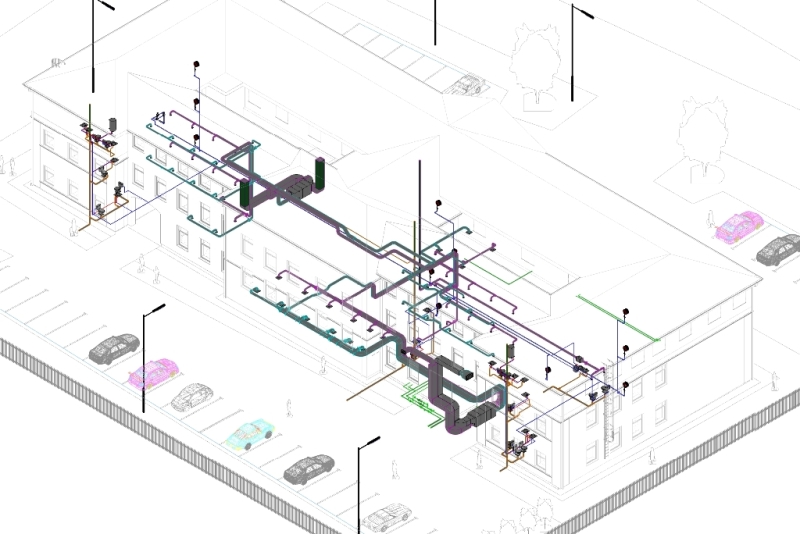
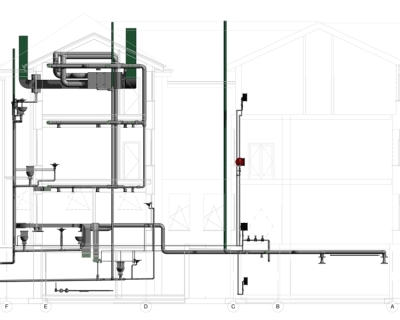
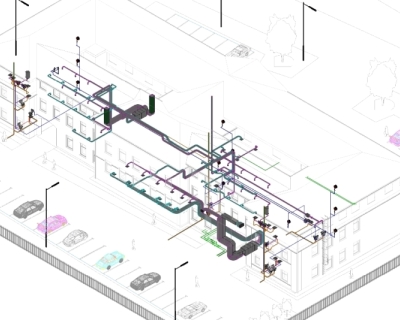
The project was initially developed in a 2D environment; subsequently, all design disciplines were integrated and coordinated using Building Information Modeling (BIM), ensuring an efficient design process and accurate implementation of technical solutions during construction.